Municipal Art Gallery of Thessaloniki - Vila Bianca
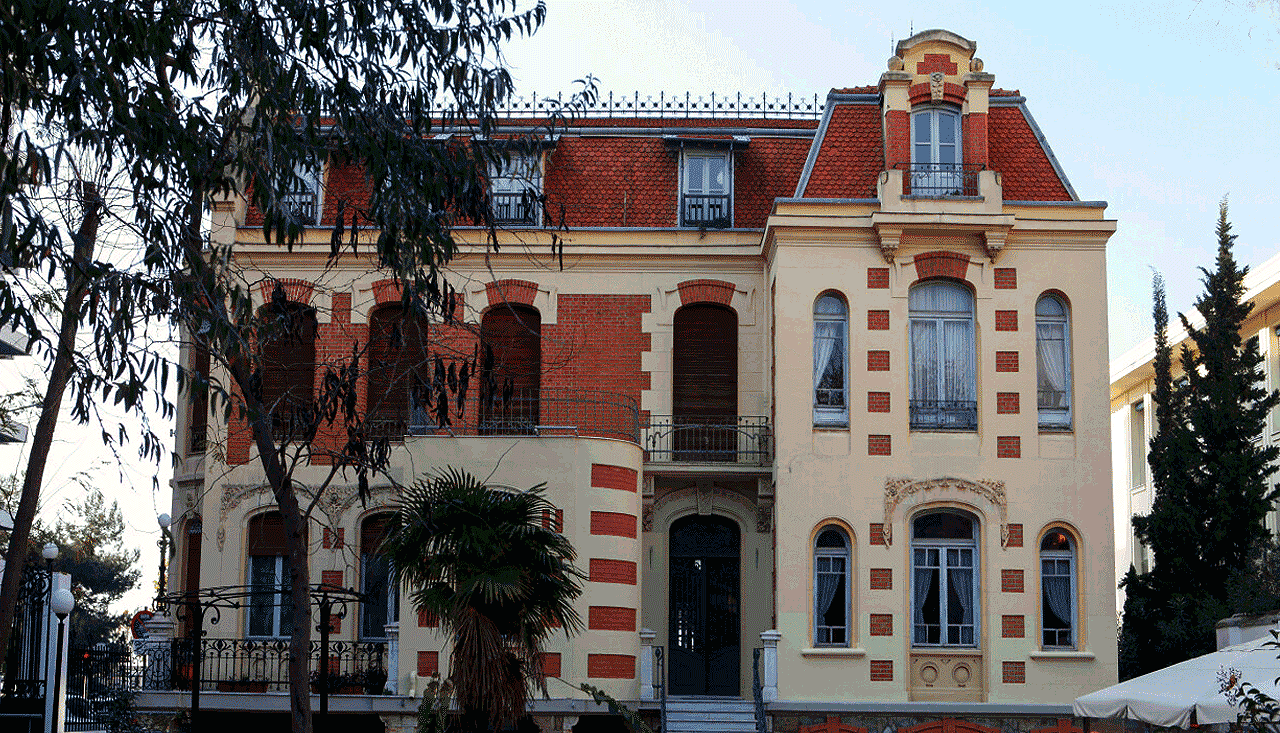
The Municipal Art Gallery of Thessaloniki is housed in a wonderful building, fine example of the eclectic style of architecture that flourished in Thessaloniki, especially in the then suburban district known as "the Towers" or "the Villas", at the turn of the century. The building was the creation of the famous Italian artist Piedro Arrigoni. Its construction started in 1911 and was completed in 1913 by Ntemprelis Tzortzis Siagas after the city’s liberation by the Greek Army.
The gallery is home to an impressive collection of Byzantine icons, as well as works of Thessalonian artists, including engravings and other works. Besides its permanent exhibitions, the gallery hosts many temporary exhibitions of Greek and foreign artists and regularly collaborates with art foundations and museums from Greece and abroad.
Thus it has presented such artists as Max Ernst and Nikos Engonopoulos (in 1997), Theofilos Hadzimihaïl (in 1998), and, for the first time in Greece, the works of Nikolaos Gyzis owned by his family (in late 1999). The latter include drawings and oil paintings from Gyzis’s travels in Greece, Asia Minor, and Germany, family portraits and scenes, allegorical subjects, genre paintings, and still lifes.
Address: 180, Vasilissis Olgas & 3, Themistokli Sofouli St., 54646 Thessaloniki
Contact: +30 2313 318538
Thessaloniki Concert Hall
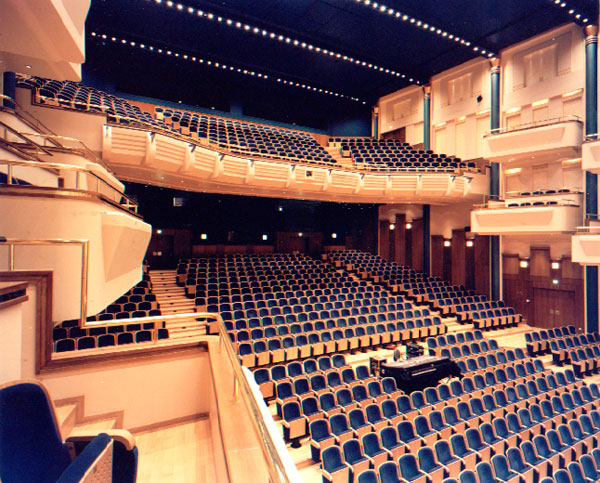
The Thessaloniki Concert Hall was built along the coast of the city, near the Posidonio Athletic Center of Thessaloniki, in an area of 18.000 sq. m., which was donated from the Greek State. It was inaugurated on 2nd January 2000.
It was thus designed as a building that would satisfy all the requirements for this purpose as well as becoming a landmark, a jewel for the city. Therefore, the Thessaloniki Concert Hall has all the characteristics that make it important: exceptional acoustics, a main hall of 1.400 seats, a reception hall (foyer), the rooms of the administrative and technical offices, as well as all the necessary facilities for the support of the events (dressing rooms, rehearsal studios, repositories for instruments etc.). Special provision exists for people with disabilities, by means of appropriate seats and elevators. Moreover, the external appearance of the building has been entirely harmonized with the history of Thessaloniki, combining elements from its byzantine past as well as from its contemporary cosmopolitan role.
The new M2 (building 2) designed by the renowned architect Arata Isozaki, adorns the city with a unique construction that epitomizes the virtues of modern architecture. Geometrical lines, extended glass surfaces and elements of steel compose an image of imposing simplicity,that comes as an antithetic, yet equivalent complement to the neighboring M1. Filled with natural light and enjoying a superb view to the sea, M2’s foyer is a vast space of sophisticated aesthetics that develops in three levels and adjoins all of the Hall’s important spaces. Equipped with cutting-edge technology and having an exceptional infrastructure, the Amphitheatron Hall can seat 500, whereas the Flat Hall, which can seat 300, can be subdivided by means of moveable partition to form three smaller rooms of 100 or two of 100 and 200 seats, thus able to host a wide range of events. Underneath the M2 building lies a two-level underground parking lot of 11.800 square meters, offering seats to over 230 vehicles, in order to enable the organization and attendance of events and preserve the city’s urban environment. Consistent with its cultural role, the Thessaloniki Concert Hall is also proud to house a Music Library and a Museum of Musical Instruments in its new building.
Address: 25, Martiou St. & Paralia St., 54646 Thessaloniki
Contact: +30 2310 895800
Archaeological Museum of Thessaloniki
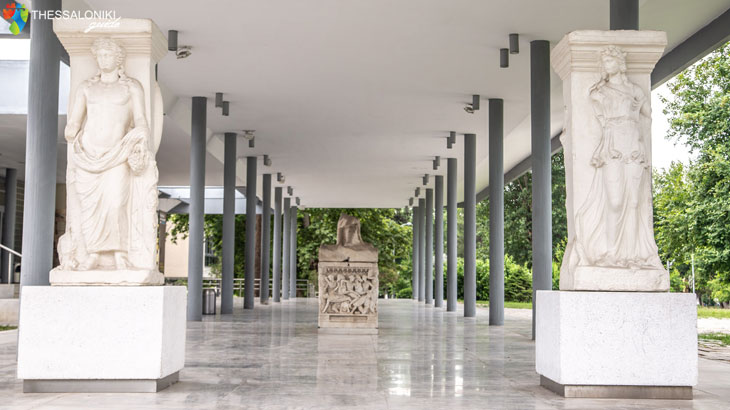
The Archaeological Museum of Thessaloniki is one of the largest museums in Greece and the central museum of northern Greece. Ιt has been housed in a building, designed by architect Patroklos Karantinos since 1962 and it has been designated as a listed monument of modern heritage, as it is one of the most representative examples of architectural modernism in Greece. Its collections include artifacts and assemblages from excavations conducted since 1912 by the Greek Antiquities Service throughout Macedonia. The museum also houses objects that used to be part of private collections and were later donated to it.
The Museum's exhibition proposal comprises of eight units, through which the visitors come in contact with the world of ancient Macedonia, its culture and its people:
1. Prehistoric Macedonia
2. Towards the Birth of Cities
3. Macedonia form the 7th c. BC until the late antiquity
4. Thessaloniki, Metropolis of Macedonia
5. The Gold of Macedon
6. Field, House, Garden, Grave
7. Memory in stone
8. Macedonia: from fragments to pixels
Address: 6, Manoli Andronikou St., P.O. Box 50619, 54013 Thessaloniki
Contact: +30 2313 310201
Museum of Byzantine Culture
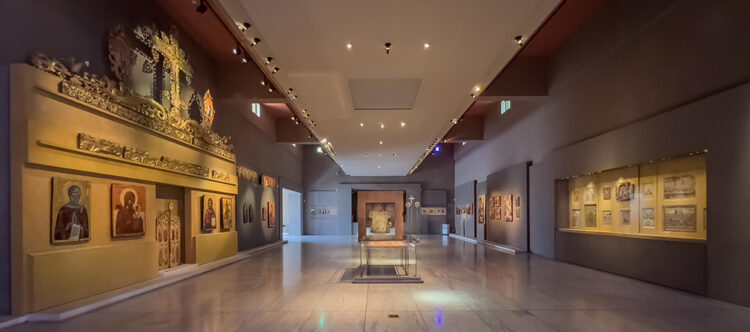
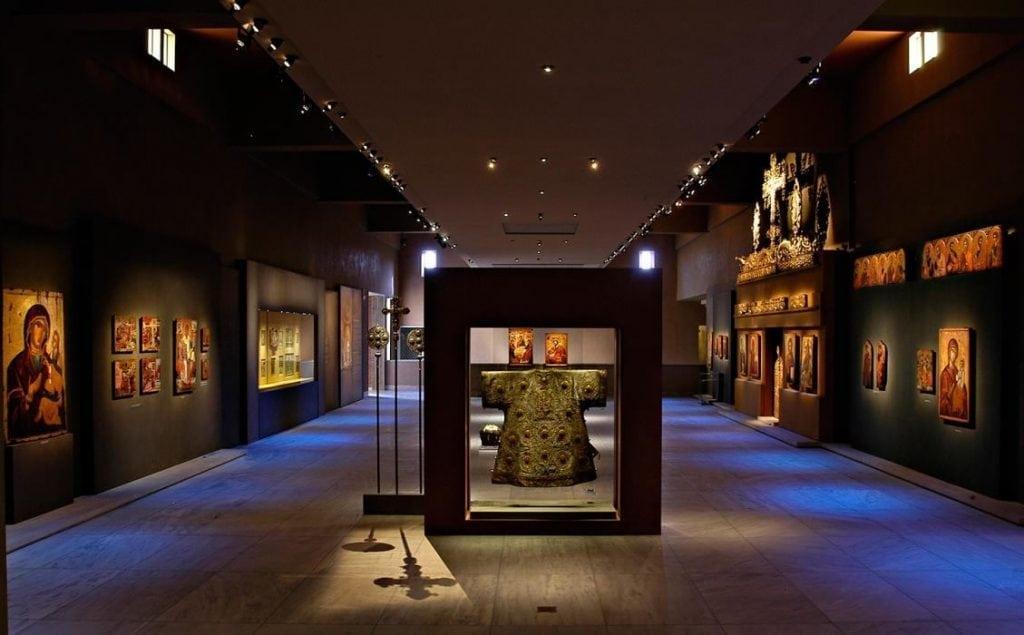
The museum, is one of the most important museums of the country, with valuable Byzantine exhibits dating back from the Early Byzantine period to the Turkish occupation.The Museum of Byzantine Culture has been awarded the Council of Europe Museum Prize for 2005, for its significant contribution to the understanding of European cultural heritage. The jury described the museum as "visitor-friendly, with an educational emphasis on children".
From the bright stillness of its enclosed courtyard to the intimate darkness of the textured interiors, this contemporary structure designed by award-winning architect and painter Kyriakos Korkos, evokes a sense of sanctuary, ideally suited to the exploration of the early Christian era through the middle Byzantine period.
The culture of the middle Byzantium period is explored through the sculptures, icons, artifacts and jewelry in an exhibition on the Macedonian and Comnenus dynasties. Artifacts of the dynasties of the Byzantine Emperors follow, then “The Twilight of Byzantium: 1204-1453” to complete this experience of both the sacred and secular throughout Byzantium.
Address: 2, Stratou Avenue, 54640, Thessaloniki
Contact: +30 2313 306400
War Museum of Thessaloniki
The museum is a department of the War Museum of Athens. It’s gates opened to the public in the year 2000.
The history of the building, though, began in 1902 when its construction was concluded, based of blueprints from the Italian architect Vitalliano Posseli. Nowadays, it hosts in its exhibitions more than 10.000 relics composing the modern history of Greece.
Starting with the pre-evolution years and ending with the Turkish invasion of Cyprus, in 1974, visitors have the opportunity to relive the Greek War of Independence, the Balkan Wars as well as the two World Wars. In this historical frame visitors also have the opportunity to interact with exhibits belonging to different nations that took part in all the eras whether as enemies or allies of the Greek Armed Forces.
Address: 4, Grigoriou Lampraki St., 54636 Thessaloniki
Contact: +30 2310 249803, +30 2310 249804
Olympic Museum of Thessaloniki
The Sports Museum was established in Thessaloniki in 1998 with the support of the Ministry of Culture, the Ministry of Macedonia – Thrace, the Special Secretariat for Sports, Athletic Unions and Associations of Local Authorities. In 2001, the Museum transformed into a non-profit private institution, named “SPORT MUSEUM of THESSALONIKI”.
In January 2008, the International Olympic Committee recognized the Museum as the first Olympic Museum of the country, with the name THESSALONIKI OLYMPIC MUSEUM. The supreme honor of the recognition of the Museum’s work and offer to the public of Central and North Greece was the turning point of the Museum’s entrance in its second decade.
The missions of the Museum are the conservation, promotion, information and innervation of the public in the issues of sport heritage, and also the communication and co-operation with agencies of the athletic family. In this frame was developed the exhibition movement of the Sports Museum, that was accompanied by publications, museological educational programs and parallel events.
Address: Agiou Dimitriou and 3rd September St., 54636 Thessaloniki
Contact: +30 2310 968531, +30 2310 968726, +30 2310 968726
Museum of the Macedonian Struggle
The Museum of the Macedonian Struggle owes its existence to the Society "Friends of the Museum of the Macedonian Struggle", a private association founded in Thessaloniki in 1979.
The Museum has been in operation since 1982 in the neoclassical building, whose plans were drawn by the famous architect Ernst Ziller. This building was the seat of the Greek General Consul during the period 1893-1912. During the period of the Macedonian Struggle (1904-1908), which is actually the fight of Macedonia to set free from the Turkish and Bulgarian occupation and unite with Greece, the Greek Consulate of Thessaloniki became a secret centre of operations, where military officers were met and guidelines were given for the evolution of the struggle.
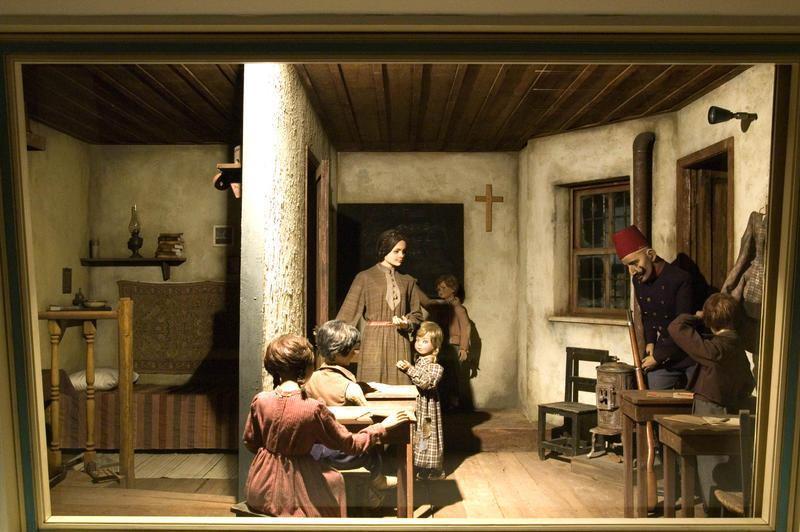
The most important exhibits are the weapons, uniforms and personal items belonging to the leaders of the Macedonian Struggle (1904-1908), as well as a collection of 1,350 photographs from that period. In the basement of the building one can view life-size dioramas with representation of scenes of the Struggle and on the first floor the visitor can watch an audiovisual show on the history of Macedonia in the 19th and 20th centuries.
There is also a Research Centre in the Museum, where an important collection of microphotographs of archival material on the period 1870-1912, as well as electronic data based on the local history of Macedonia are available for perusal and study.
Address: 23, Proxenou Koromila St., 54622 Thessaloniki
Contact: +30 2310 229778
Folklife and Ethnological Museum of Macedonia Thrace
The Folklore and Ethnological Museum was founded in 1973 by the Macedonian Educational Association and it is located in the building called “The Old Government House”.
The construction took place around 1905-1906 by architect Eli Modiano, who added to the eclectic style-mainly in the metal railings and door panels of the main entrance - elements of the “Art Nouveau”, the new artistic trends of the times mostly applied in Paris in the late 19th century.
The building became a Museum, after the first attentive restoration based on a study of experts under the Professor Nikolaos Moutsopoulos.
The four floors of the museum present the traditional culture of Macedonia and Thrace with collections of 15,000 objects (woven textiles, embroidery, local costumes, tools, weapons, domestic articles, musical instruments, and woodcarving, woodworking, and metalworking equipment).
The museum collects, researches, and studies everything in connection with the Macedonia and Thrace tradition and presents them to the public in temporary exhibitions. It has also a specialized library, a photographic archive and a library of records and sounds.
Address: 68, Vasilis Olgas St., 54642 Thessaloniki
Contact: +30 2310 830591, +30 2310 889840, +30 2310 889855
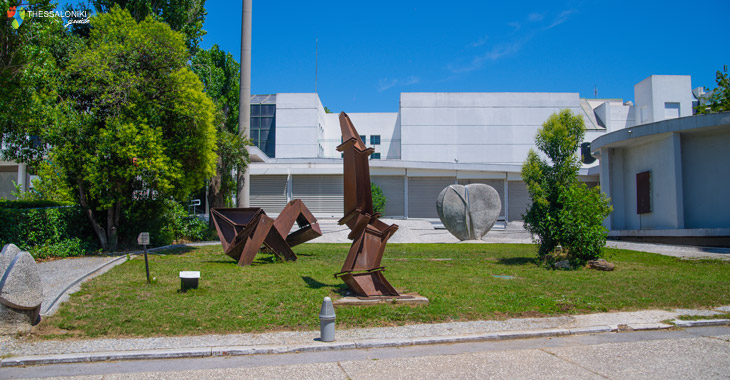
Macedonian Museum of Contemporary Art
The Macedonian Museum of Contemporary Art was established in 1979 by a group of visionary people who wanted to create an institution that would on the one hand promote Greek and international contemporary art by informing the public about art and aesthetics, and on the other publicise contemporary Greek cultural life abroad. These aims are achieved by organising solo, group, and retrospective exhibitions, round tables, and talks and by taking part in international programmes. This is a living museum, which follows cultural movement at an international level.
It also offers guided tours and, in the framework of EU programmes, collaborates with other museums with a view to devising educational programmes for adults.
Other events hosted by the MMCA include lectures, discussions on subjects relating to aesthetics, art history, and the organisation of museums and collections, presentations of books and art projects, meetings with artists, happenings, and bazaars.
In the library two-and-a-half thousand titles of books and periodicals on subjects relating to painting, sculpture, engraving, architecture, and photography, all the catalogues published by the MMCA, audio-visual material, and the museum's archive of artists are available to the public.
Address: Helexpo, 154, Egnatia St., 54636 Thessaloniki
Contact: +30 2310 240002, +30 2310 281567